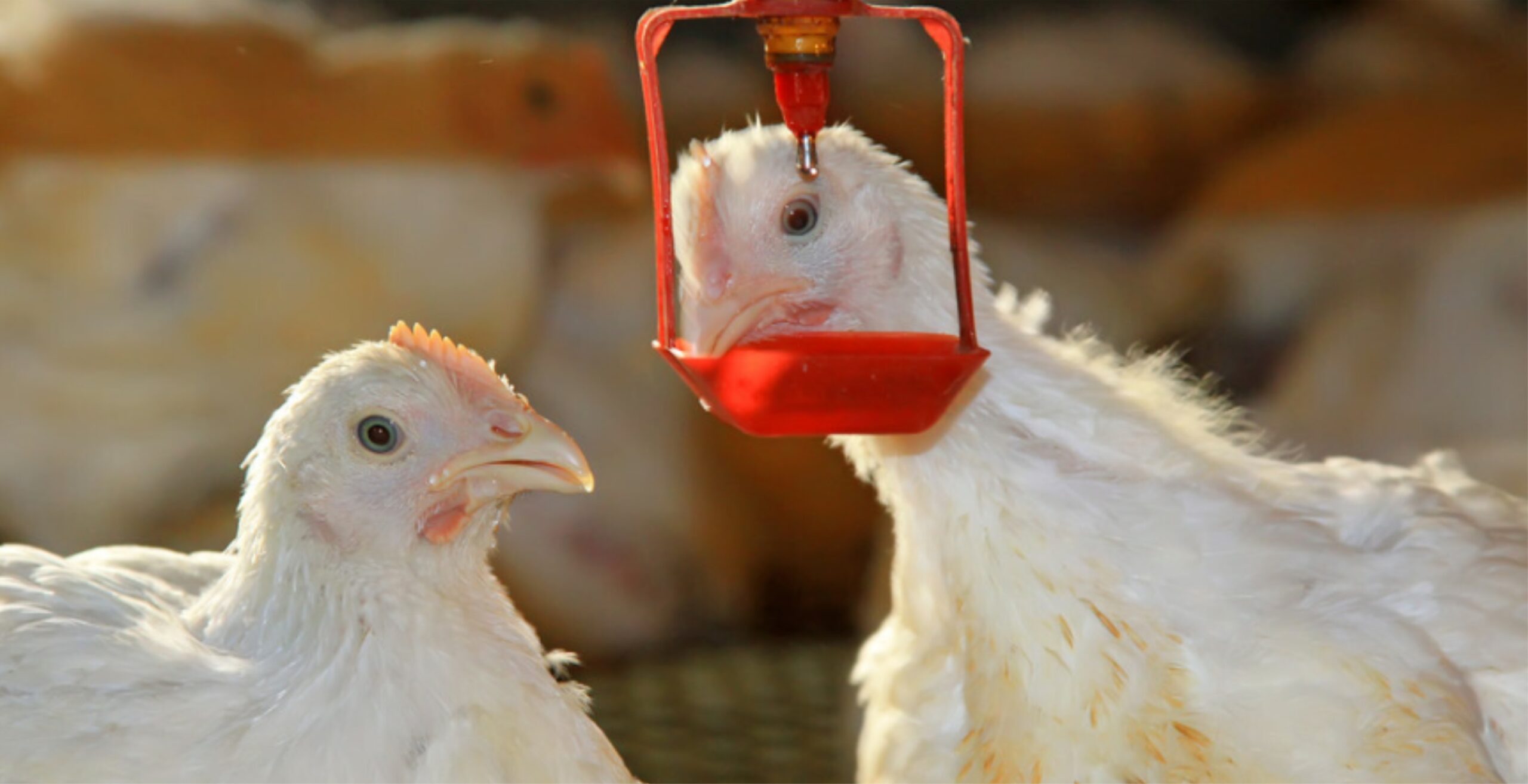
Increased water scarcity has made water efficiency a key issue in poultry.
[Excerpts of presentations by graduate students at the University of Arkansas, USA during the 2026 International Poultry Scientific Forum]
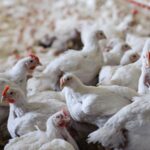
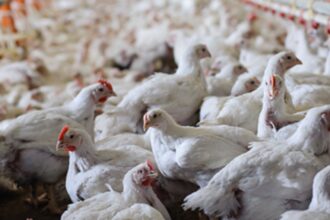
In a poster presentation, Karen M. Rivera and colleagues at the University of Arkansas noted that water is one of the most essential nutrients influencing growth, feed efficiency, and overall welfare in broilers. This study evaluated the effects of water deprivation on production metrics and litter quality in genetic lines selected for low and high water conversion ratio.
Birds were subjected to 0, 12, and 24 hours of water deprivation on day 25 or 26 and day 38 or 39. Body weight, feed conversion ratio, and water conversion ratio were recorded weekly, and litter samples were collected on day 40 from three locations to determine the litter moisture content percentage. High water conversion broilers had greater body weight than low water conversion broilers throughout the study, with final body weight means for high water conversion birds being 2596 grams and 2455 grams for low water conversion birds.
The feed conversion ratio increased incrementally as water deprivation duration was increased on days 21 to 28 (0 hours: 1.74; 12 hours 1.58; 24 hours: 2.28) and days 35 to 41 (0 hours: 1.99; 12 hours: 2.17; 24 hours: 2.29).
The highest litter moisture content was found under the water line (26.2%), followed by the feed line (19.0%) and then open areas (15.2%). Litter moisture was the highest for high water conversion birds (34.6%) compared with the low water conversion birds (14.5%). There were no significant effects of water deprivation duration on litter moisture.
This study demonstrated that genetic selection for water conversion ratio may influence other production traits and litter quality. Water deprivation had only a short-term impact on the feed conversion ratio, with no effects on body weight, water conversion ratio, or litter moisture. This indicates that periods of up to 24 hours of water restriction have little effect on production parameters.
Heat stress
Allison Weaver and colleagues at the University of Arkansas studied the effects of heat stress on the blood chemistry of broiler breeders selected for water conversion ratio. Heat stress and water efficiency are top issues in the poultry industry due to increased water scarcity and mortality risk. The study determined whether selection for water conversion ratio affects the ability of broiler breeders to cope with cyclic heat stress. High water conversion ratio, low water conversion ratio, and modern random-bred broiler breeder genetic lines were studied under heat stress conditions.
Birds were sampled during the midpoint of an 8-hour heat stress period, with separate models for males and females. In both males and females during heat stress, glucose was lower in low water conversion ratio birds than in high water conversion birds. The results of the study indicate that selection for water conversion ratio influences how broiler breeders respond to heat stress. High water conversion ratio breeders may be less susceptible to metabolic and acid/base balance disturbances. Additionally, breeder females recovering from heat stress may be more susceptible to the effects of fasting.
Water deprivation
Seong W. Kang and colleagues at the University of Arkansas said that water shortages may negatively affect the productivity and welfare of chickens. This study aimed to evaluate the impact of water deprivation on stress-responsive gene expression in the liver. High and low water efficiency birds and birds were subjected to 0, 12, and 24 hours of water deprivation and liver samples were collected on days 38 to 40.
Hepatic expression levels of glucocorticoid receptor (GR), 11 beta-hydroxysteroid dehydrogenase-1 (11b-HSD1), and brain-derived neurotropic factor (BDNF) genes were determined by qPCR. Expressions of GR and 11b-HSD1 were increased by 50% and 28% in low water efficiency females compared to high water efficiency females, respectively. There with no differences in the males, indicating a sex-dependent effect of water-efficiency selection on the hepatic stress response.
Water deprivation increased GR and 11b-HSD1 expression 3.2- and 2.3-fold, respectively, in high water efficiency males, but not in the high water efficiency females. These results suggest that divergent selection for water efficiency in broilers significantly reduced hepatic stress response to water deprivation in female birds but not in males. The pronounced stress responses of male high water efficiency broilers to water deprivation stress, compared with females, indicate sex-specific, favorable water deprivation stress responses in high water efficiency broilers.